Choosing tempered glass often looks simple — match the size, check the brand, and install.
But in real use, this is where most screen protection problems begin.
Cracked edges, camera misalignment, touch issues, lifting corners, or complaints of “wrong fitting” often don’t happen because the glass quality is poor — they happen because the display structure was ignored.
This guide exists to remove that confusion.
Not to sell — but to help you choose correctly, once.
It works alongside our display-specific guides, where each screen type is explained with its corresponding tempered glass logic.
🤔 Why Tempered Glass Selection Is More Complex Than It Looks
Many users believe screen size alone decides compatibility.
In real use, two phones with the same screen size can require different tempered glass designs.
This happens because displays differ in:
- 📷 Front camera placement
- 🧠 Sensor layout
- 📐 Bezel thickness
- 🌊 Screen edge shape
- ⬆️⬇️ Top & bottom margins
Ignoring these factors often leads to glass that technically fits — but performs poorly in real use.
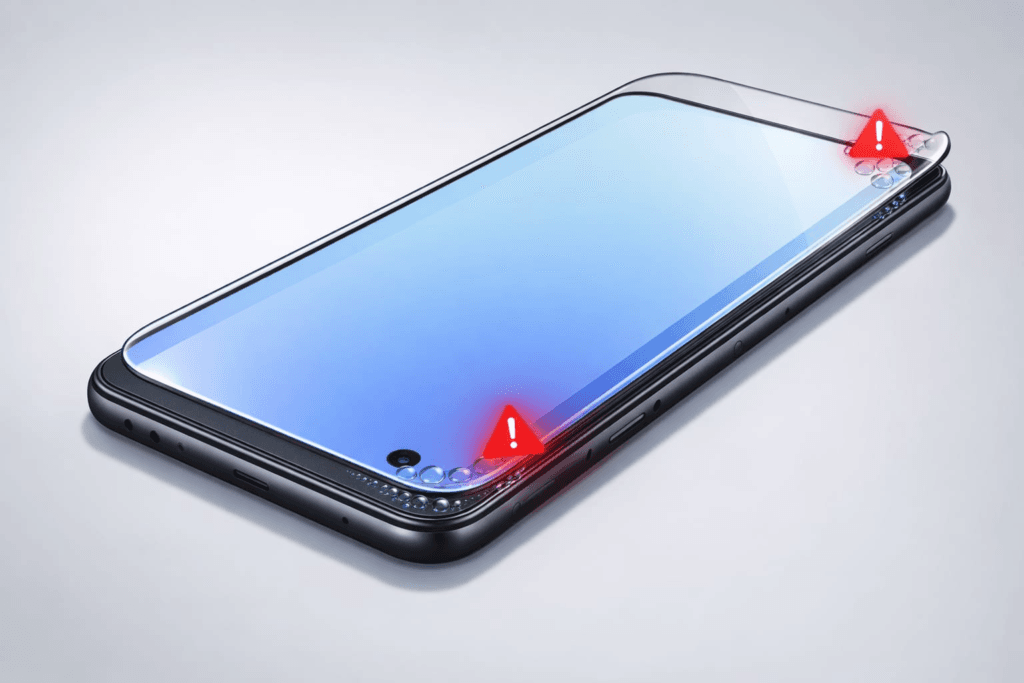
⚠️ Common Real-World Fitment Issues Users Encounter
These are the most frequent complaints reported by users, retailers, and repair shops:
- ❌ Camera area not aligning properly
- ❌ Glass lifting from corners after installation
- ❌ Reduced touch sensitivity
- ❌ Fingerprint sensor not responding
- ❌ “Wrong fitting” complaints despite correct size matching
These issues are rarely random defects.
👉 They are caused by a mismatch between display structure and glass cut logic.
🧠 Why Display Structure Comes Before Brand or Price
Brand, thickness, hardness, and price do matter —
but only after compatibility is correct.
Choosing glass without understanding the display often leads to:
- 🔁 Repeated replacements
- 📦 Unnecessary returns
- 🚫 False blame on product quality
- 🤝 Loss of trust between buyer and seller
Display structure is the first filter.
Other factors follow after compatibility is confirmed.
📐 Understanding Smartphone Display Structures (High-Level)
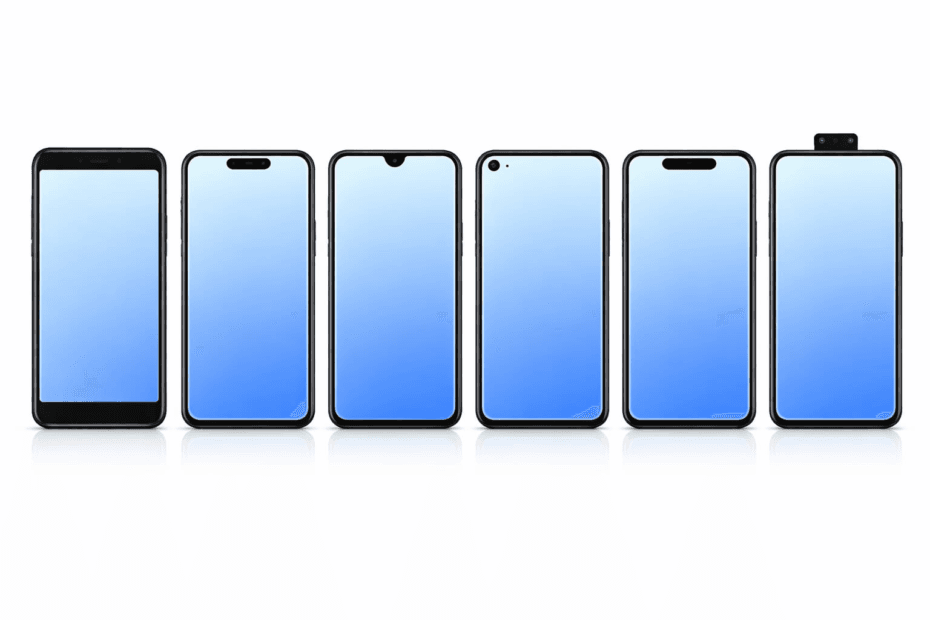
Modern smartphones use a limited number of display structures.
Each structure follows its own tempered glass rules, especially for:
- Camera cut vs no-cut logic
- Edge coverage style
- Alignment tolerance
You don’t need technical knowledge — recognizing your phone’s display structure is enough to reach the right solution.
👉 Most readers already recognize which display type their phone belongs to — and once that’s clear, tempered glass selection becomes specific, not confusing.
📷 Why Camera Cut Logic Is Critical
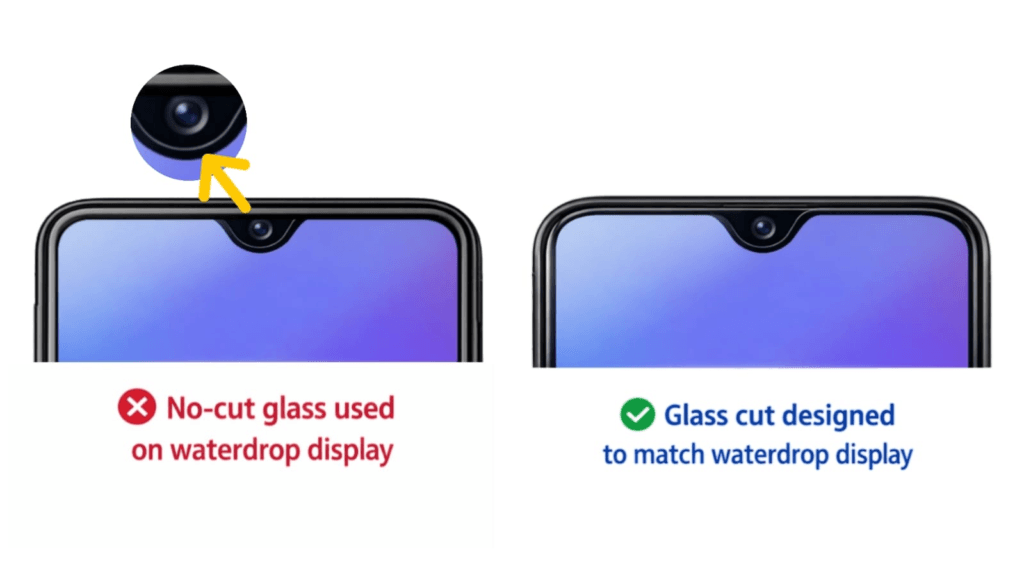
One of the most commonly misunderstood areas of tempered glass selection is the front camera cut.
- Some displays require a precise cut
- Others work best with no cut at all
Using the wrong cut can cause:
- Camera obstruction
- Dust accumulation
- Visual distraction
- Poor alignment
⚠️ This is why tempered glass rules cannot be universal — they depend directly on display structure.
These rules are consistent across brands and price segments, and are followed by experienced installers and repair technicians.
🖼️ Display-Specific Camera Cut Overview
Every smartphone display has a unique camera placement and edge structure, which dictates the correct tempered glass cut.
Understanding these differences is critical to ensure:
- ✅ Proper front camera visibility
- ✅ Accurate sensor alignment
- ✅ Full-edge protection without interference
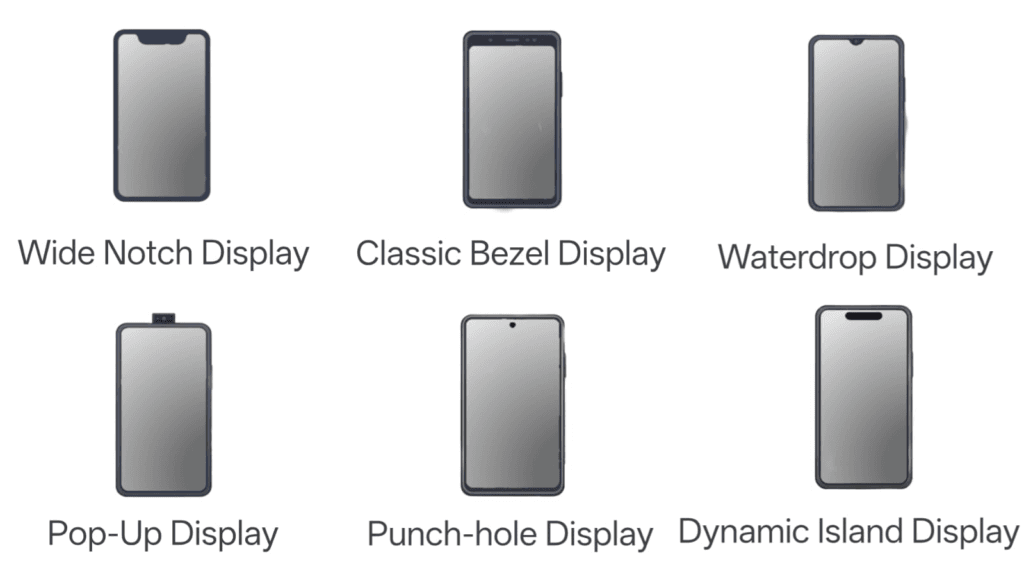
Below are the six most common smartphone display structures, explained only from a tempered glass compatibility perspective.
(Detailed installation guidance is provided in the related pages for each display type.)
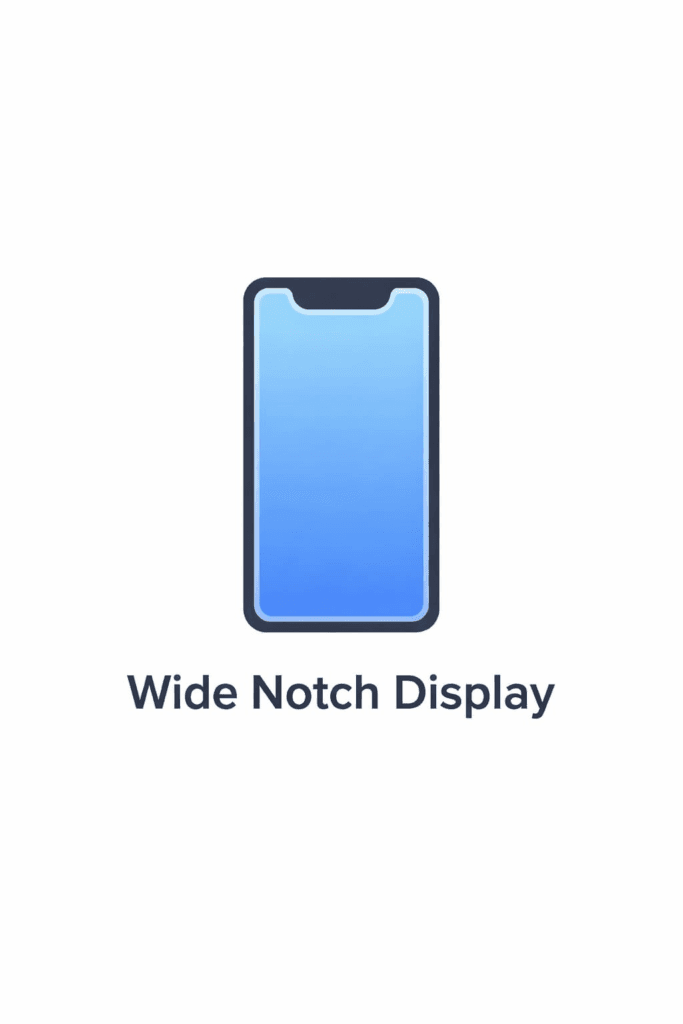
1️⃣ Wide Notch Display
“Precise camera cut ensures proper selfie and sensor alignment.”
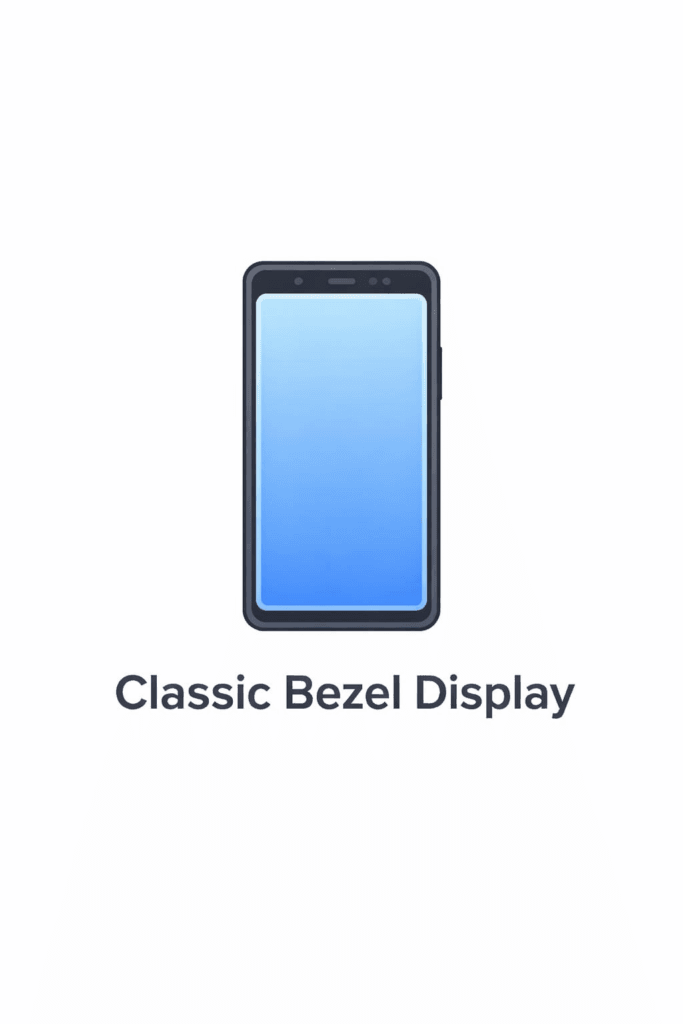
2️⃣ Classic Bezel Display
“Camera cut is required to avoid obstruction with bezel layout.”
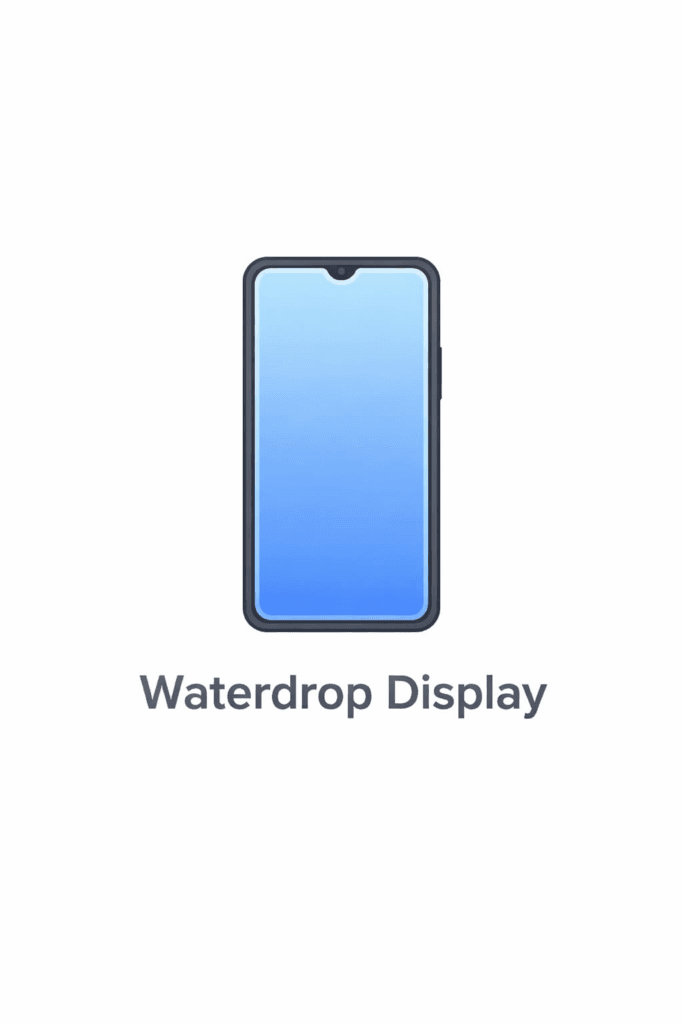
3️⃣ Waterdrop Display
“V or U-cut maintains camera visibility through notch shape.”
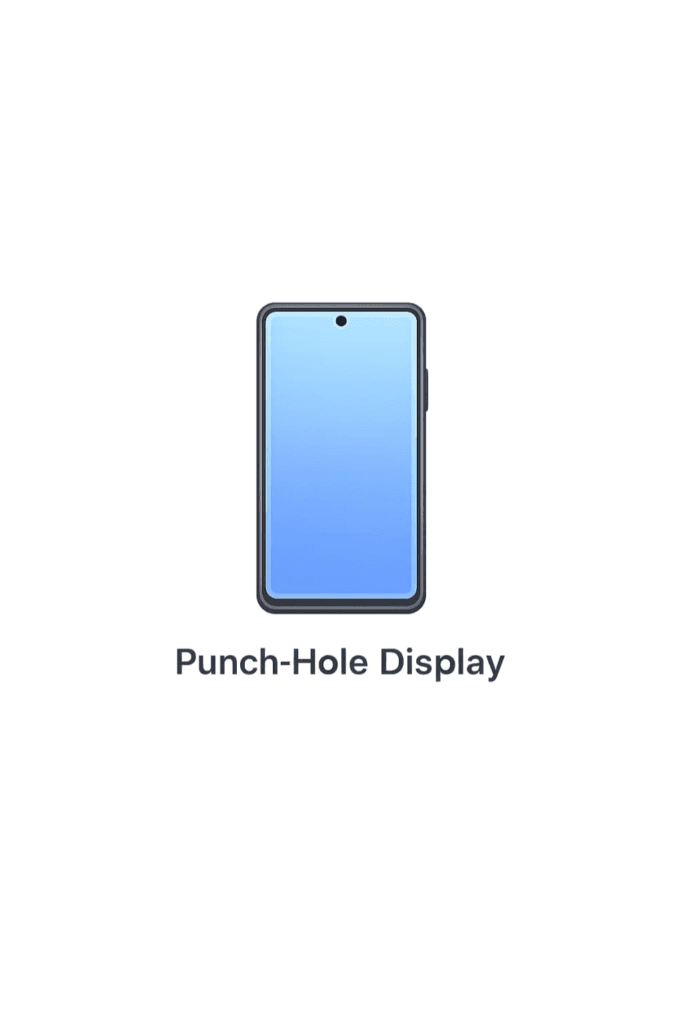
4️⃣ Punch-Hole Display
“No cut needed because hole already accommodates the camera.”
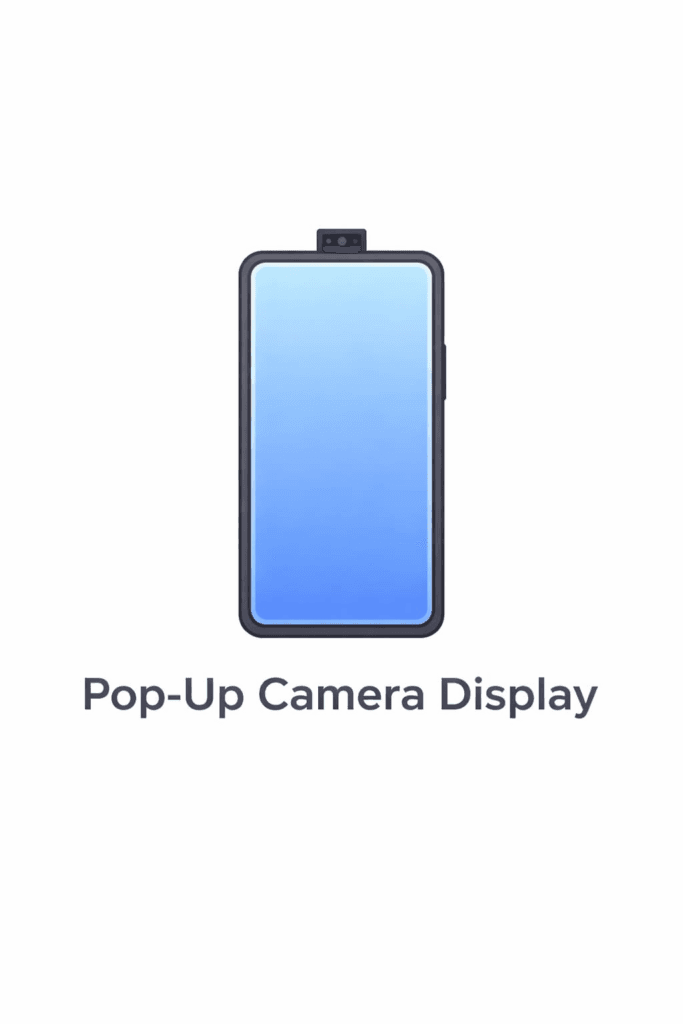
5️⃣ Pop-Up Camera Display
“Full-edge coverage keeps the screen protected; no cut required.”
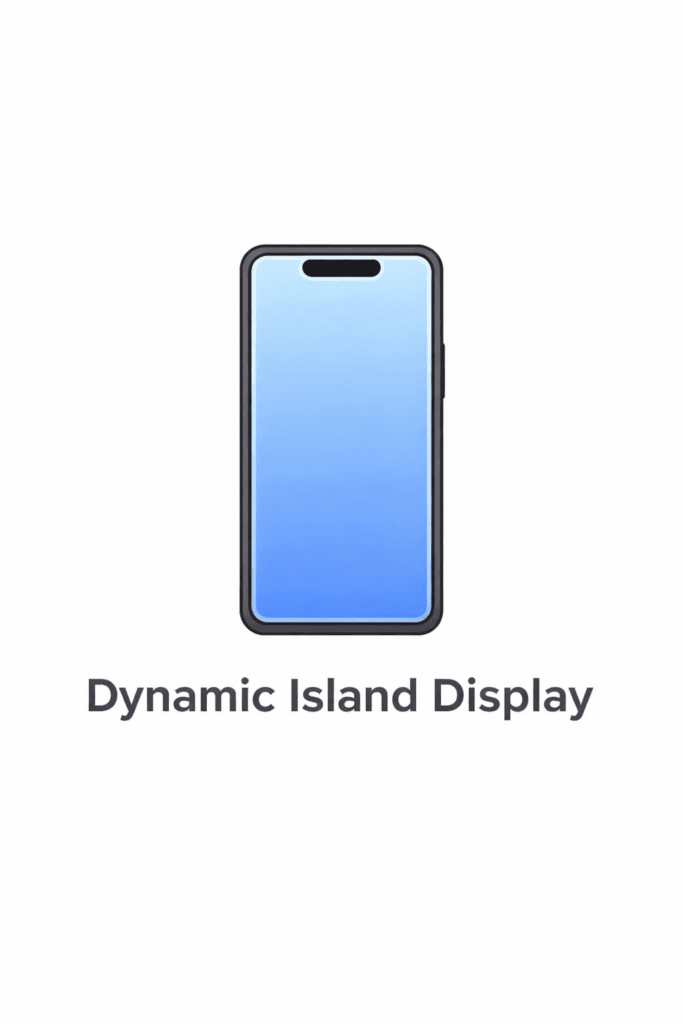
6️⃣ Dynamic Island Display
“Uncut glass fits around capsule-style display without interference.”
🧩 Types of Tempered Glass (Directional Overview)
You’ll commonly see options like:
- Clear tempered glass with border (Bezel-matching designs)
- Matte or privacy glass
- Full-coverage / Big ARC glass
- Border-less / Bezel-less Clear glass
- Case-friendly designs
Each type has its own use-case.
👉 But not every glass type works equally well on every display structure.
Choosing glass type before confirming display compatibility is a common mistake.
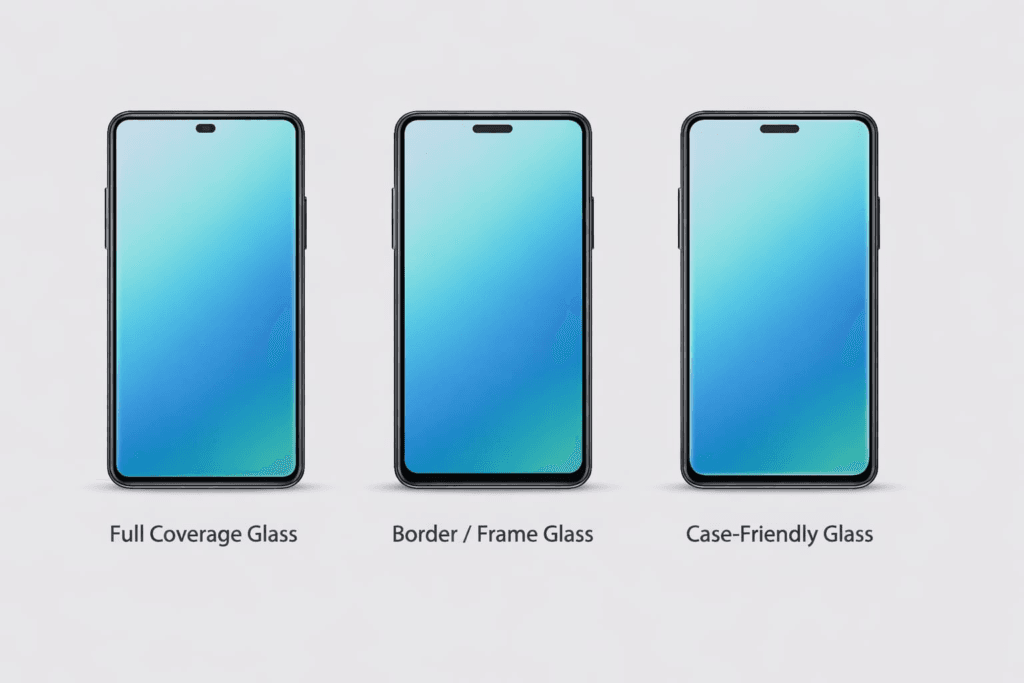
The same phone can use different glass designs depending on edge coverage and case compatibility — once display compatibility is already confirmed.
👆 Thickness, Touch Response & Fingerprint Sensitivity
Glass thickness, adhesive quality, and edge finishing directly affect:
- Touch accuracy
- Fingerprint unlock performance
- Installation success
- Long-term durability
These factors explain why display-specific guidance exists, especially for:
- In-display fingerprint phones
- Curved or narrow-bezel screens
🌐 About Universal Tempered Glass (Important Clarification)
Universal tempered glass is designed to fit multiple models with similar screen geometry.
When chosen correctly, it can be:
- ✅ Cost-effective
- ✅ Practical for retailers
- ✅ Reliable for many users
However…
⚠️ Even universal glass must follow display structure rules, not just size.
👉 Universal glass reduces choice complexity — but does not replaces display logic.
🚦 What to Do Next
You don’t need to remember technical rules or compare specifications.
Each display type follows a proven glass solution, based on:
- How the front camera is positioned
- How the screen is shaped and covered
- How the glass performs in real installation and daily use
To keep things clear and practical, every display type is explained separately, with real-world logic — not assumptions.
👉 Your display type decides the correct tempered glass choice. Select the screen style that matches your phone — the right solution starts there.
🔍 Find Your Mobile Model (Optional)
If you already know your phone model, you may use the search below to explore compatible options.
There’s no need to hurry here.
This search feature is also available inside each display-specific guide, where results are explained with clearer context. Final selection should always align with your phone’s actual display structure and front camera layout at the time of installation, as explained in the display-specific pages that follow.
🎯 How This Guide Helps You
👤 End Users
- Fewer wrong purchases
- Better long-term protection
- No repeated replacements
🏪 Retailers & Sellers
- Reduced returns
- Clearer recommendations
- Higher customer trust
🔧 Wholesalers & Repair Shops
- Better stocking decisions
- Fewer compatibility disputes
- Professional credibility
🇮🇳 Built for the Indian Mobile Market
This guide reflects real usage patterns, installation conditions, and device diversity commonly seen in the Indian mobile market — where informed selection matters more than marketing claims.
🧭 Final Thought
Tempered glass is not a one-rule product.
It is a display-dependent decision.
Once your display type is clear, everything else becomes simple.