Selecting the correct tempered glass for a wide notch display mobile phone requires more than matching screen size.
In wide notch phones, the exact notch shape, width, and depth decide whether the glass aligns correctly — or leads to lifting, dust entry, and camera misalignment over time.
This guide explains how wide notch displays work, why shape-accurate camera cut is essential, and how correct selection helps avoid common real-world fitting issues.
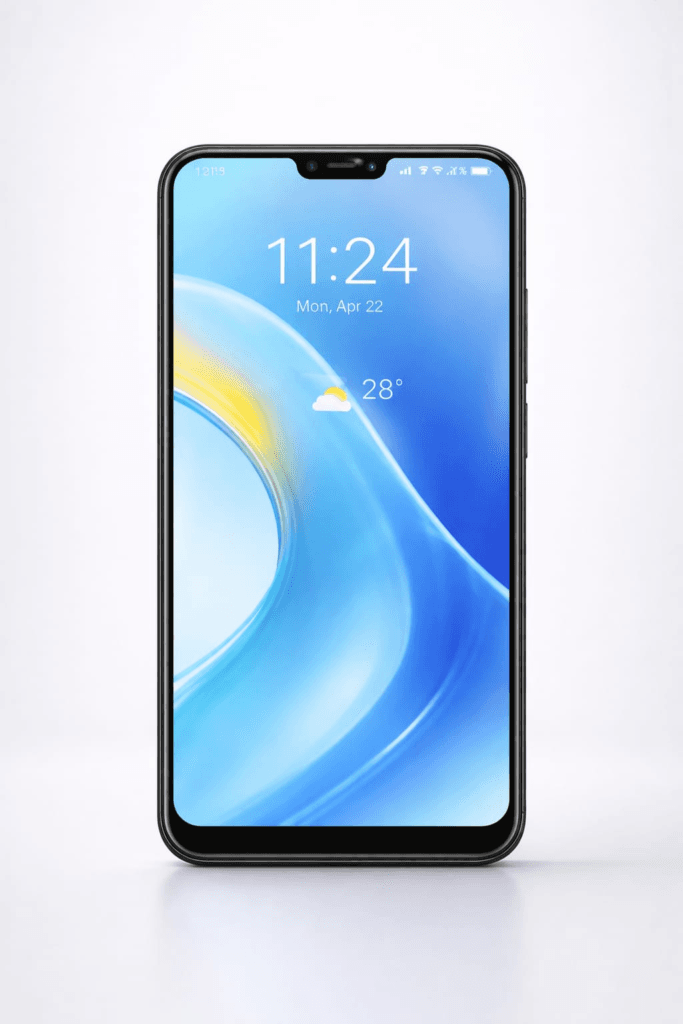
✅ Quick Compatibility Check (Read This First)
Use this quick check if you want an instant direction:
✔️ Your phone has a wide notch-style cutout at the top of the display
✔️ The notch shape (bathtub-style / wide U-shape) is clearly defined
✔️ The tempered glass camera cut matches the notch shape and width precisely
❌ The notch shape or size does not align with the glass cut
❌ The cut appears smaller, wider, or differently curved than your phone’s notch
👉 If all ✔️ apply → Continue reading this page
👉 If any ❌ apply → Stop here and select the correct display type below
🔀 Navigation Shortcut (Important)
If your phone does NOT have a wide notch, this guide is not relevant for your device.
Please move directly to the correct guide below to avoid confusion:
- Punch-Hole / Hole-Punch → Punch-Hole Display Tempered Glass
- Waterdrop / Infinity-U → Waterdrop Display Tempered Glass
- Dynamic Island → Dynamic Island Tempered Glass
- Notch-less / Pop-up Camera → Notch-less Display Tempered Glass
- Classic Bezel → Classic Bezel Tempered Glass
👉 Each display follows its own tempered glass cut logic
Choosing the wrong logic leads to fitting issues instead of protection.
Understanding the Wide Notch Display Structure
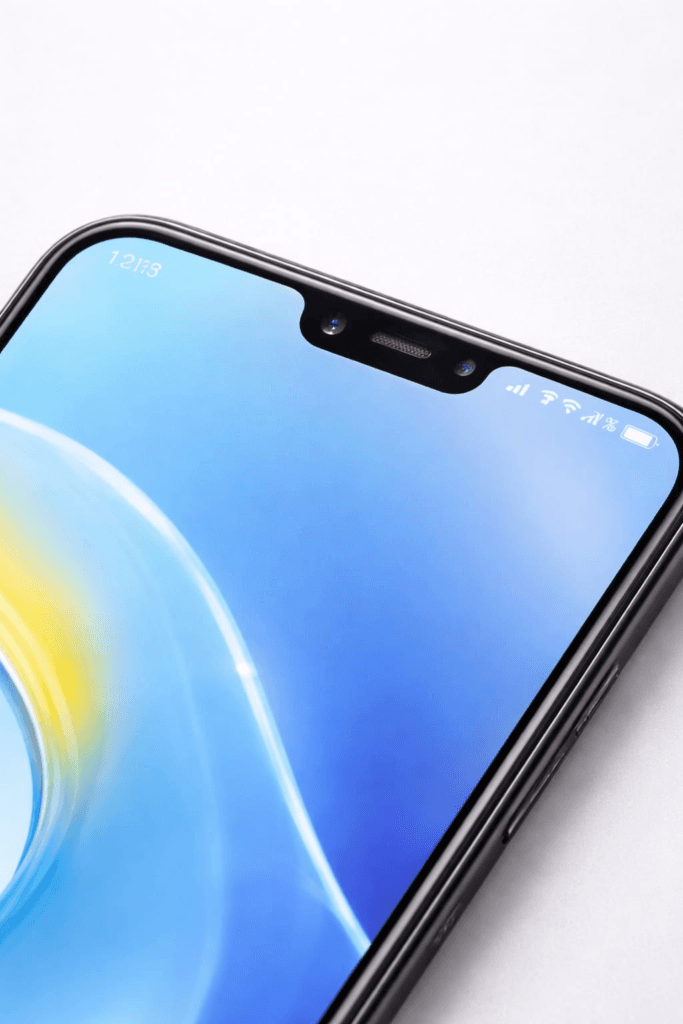
A wide notch display features a broad cut-out at the top of the screen that houses:
- Front camera
- Sensors
- Speaker (in many models)
Unlike waterdrop or punch-hole designs, the notch here occupies significant horizontal screen space.
Wide notch displays were commonly used in:
- Early full-screen smartphones
- Older flagship and mid-range models
- Many refurbished and circulation-heavy devices still active today
📌 Although no longer common in new launches, millions of wide notch phones remain in daily use, resale, refurbishment, and secondary-device roles.
Why Exact Notch Shape Matters More Than Screen Size
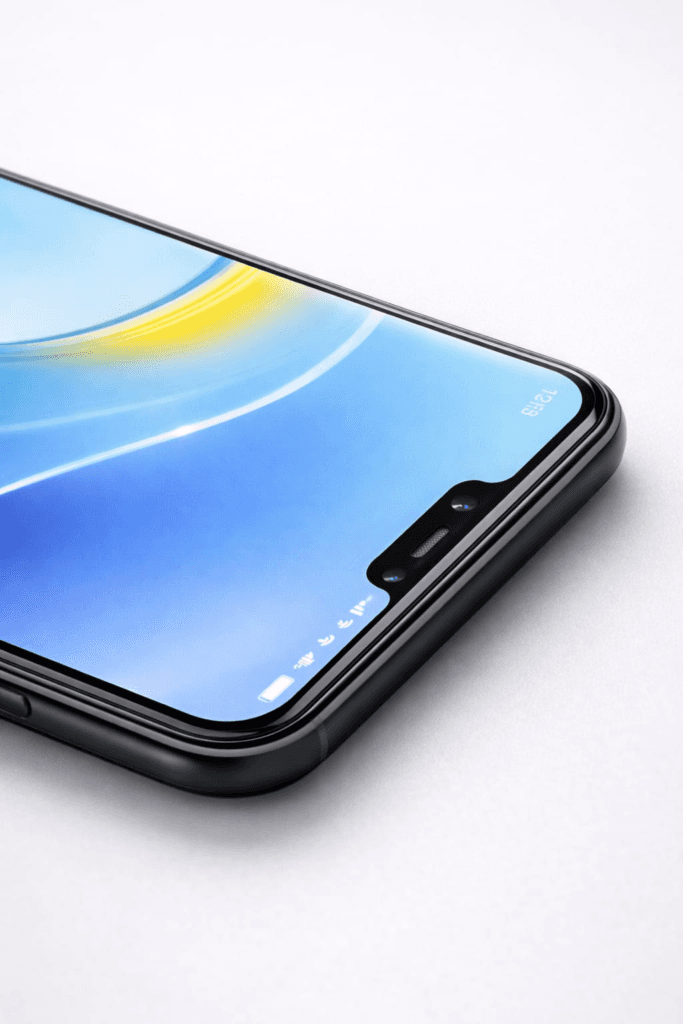
For wide notch displays, camera cut shape accuracy is non-negotiable.
Wide notch designs are not uniform across models. They may be:
- Small bathtub-style
- Medium width
- Large or deep wide notch
- Slightly curved or flatter at the base
🔍 The tempered glass cut must mirror the notch geometry precisely — not just approximate it.
If shape does not match the glass cut:
⚠️ Glass lifts near the notch edges
⚠️ Dust collects around the cut
⚠️ Camera alignment looks off
⚠️ Long-term peeling increases
This is why size-only or generic camera cuts often fail over time.
Wide Notch Is Not a Single Fixed Design
A common mistake is treating “wide notch” as a single, uniform format.
In reality:
- Two phones can both be labeled “wide notch”
- Yet have different notch widths, depths, and curves
- And therefore require different tempered glass cuts
📌 This is why visually matching the notch shape before installation is critical.
Two Market Practices You’ll Commonly See
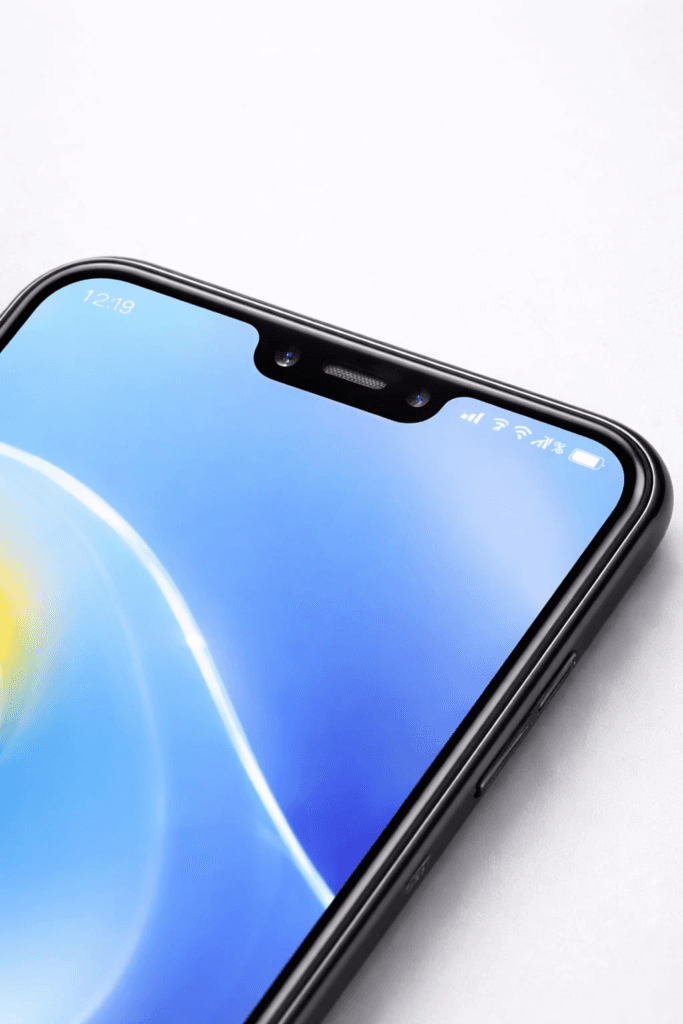
1️⃣ Shape-Matched Wide Notch Glass (Correct Approach)
- Designed specifically for wide notch displays structures
- Camera cut follows notch width and curve precisely
- Provides stable installation and predictable performance
- Suitable for long-term use, resale and refurbished devices
2️⃣ Near-Fit or Approximate-Cut Glass (Common but Risky)
- Selected mainly based on diagonal screen size
- Camera cut is generic, approximate or loosely shaped
- Looks acceptable on day one
- Develops edge lifting, dust entry, or alignment issues over time
📌 Both are sold openly — but only the first follows true display-structure logic.
Real-World Fit Factors Beyond Notch Shape
Even with a correct notch cut, real-world performance depends on fit behavior:
- Width tolerance: Glass must align with the active display width
- Edge clearance: A slight inset helps prevent pressure-related lifting
- Bezel thickness: Influences how the glass settles around the notch area
- Case compatibility: Tight-fitting covers can stress incorrectly sized glass
📌 Two wide notch phones with the same screen size may still require different tempered glass designs.
Role of Good Brand & Manufacturing Precision (Very Important)
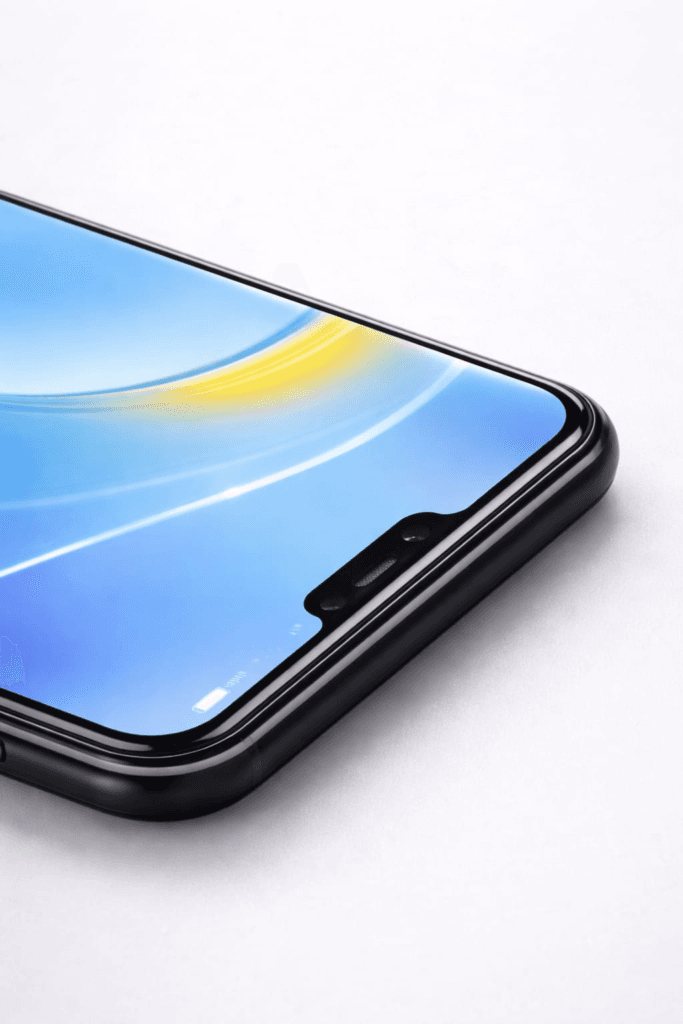
Even when display type, notch shape, and sizing are correct, real-world results still depend heavily on manufacturing quality.
What actually matters in real use:
- Edge finishing: Poor polishing increases the risk of lifting and edge chipping
- Cut precision: Accurate CNC cutting that follows wide notch curves precisely
- Adhesive uniformity: An even adhesive layer helps prevent halo effects and peeling
- Glass flatness: Micro-warping can cause delayed installation or long-term failure
📌 “Good brand & good quality” does not mean the name alone —
it means consistent cutting accuracy, proper tempering, and reliable adhesive performance.
Two wide notch tempered glasses with the same cut can perform very differently in daily use.
Replacement Cycle & Practical Usage Advice
Tempered glass is a sacrificial protection layer, not a permanent solution.
Recommended replacement cycle:
- Every 120–150 days, or
- Immediately after visible cracks, lifting, or edge damage
A compromised protector can no longer protect the display reliably.
🔍 Pro Tip: How Wide Notch Compatibility Is Decided
Wide notch tempered glass compatibility is decided by:
1️⃣ Display structure
2️⃣ Exact notch shape & cut accuracy
3️⃣ Real-world fit behavior
4️⃣ Manufacturing quality consistency
—not by trends, naming, conventions, or screen size alone.
For the core selection logic that applies across all display types, refer to the Tempered Glass Gold Guide.
This page applies those same principles specifically to wide notch display phones.
Find Your Mobile Model – Wide Notch Display
Use the live search below to locate the correct wide notch tempered glass for your phone.
(Compatibility is identified based on notch shape, cut accuracy, and fit behavior — not screen size alone.)
Trader / Business Reminder: Model names above are for reference and stock verification only, listed as mentioned on the box. Always confirm the actual device design and camera placement before selecting tempered glass.
Who This Guide Is For
👤 End Users
- Avoid incorrect notch cuts
- Reduce frequent replacements
🏪 Retailers
- Prevent mis-recommendations
- Build trust and reduce returns
🔧 Repair Technicians
- Ensure stable installations
- Avoid near-fit or approximate cut practices
📦 Wholesalers
- Stock correct wide notch variants
- Reduce dead stock and disputed inventory