Selecting the correct tempered glass for a punch-hole / Infinity-O display mobile requires more than matching screen size.
Camera placement, bezel width, edge curvature, and glass quality together determine whether the protection stays stable or just covers the display.
Tempered glass protector designed for punch-hole / Infinity-O display mobiles – typically no-cut full-display
This child guide explains punch-hole / Infinity-O displays, why no-cut glass is usually preferred, optional cut variants, and how correct compatibility prevents common fitting issues seen in daily use.
✅ Quick Compatibility Check (Before You Read Further)
Use this shortcut if you want an instant answer:
✔️ Your phone has a small circular front camera embedded inside the display
✔️ The tempered glass covers the display fully without a cut for the camera
❌ The glass is not a near-fit, oversized, or misaligned cut
👉 If all ✔️ apply, this is the RIGHT tempered glass for your phone.
👉 If not, do not proceed — wrong glass may cause lifting, dust entry, or camera blur.
(If you’re still in doubt, the sections below explain the logic in detail.)
🔀 Navigation Checkpoint
If your phone does NOT have a Punch-Hole / infinity O notch, this page will not help you.
Please move directly to the correct guide to avoid confusion:
- Waterdrop / Infinity-U → Explore Waterdrop Display Tempered Glass
- Dynamic Island → Explore Dynamic Island Tempered Glass
- Notch-less / Pop-up camera → Explore Notch-less Display Tempered Glass
- Wide Notch → Explore Wide Notch Display Tempered Glass
- Classic Bezel → Explore Classic Bezel Tempered Glass
👉 Each display follows its own cut logic.
Choosing tempered glass based on the correct display structure helps prevent camera obstruction, fitting issues, and unnecessary replacements.
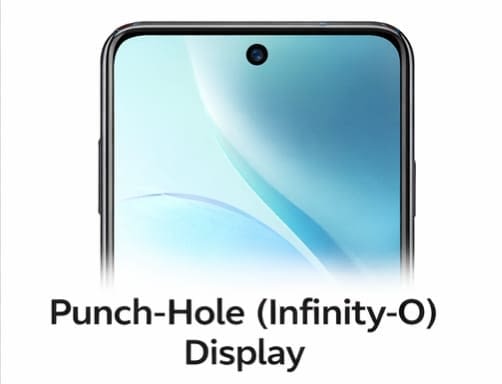
Understanding the Punch-Hole (Infinity-O) Display Design
A punch-hole display features a small circular camera opening embedded inside the active display area, usually positioned:
- Center (most common)
- Corner (some models)
This display style also referred to as:
- Punch-Hole display
- Hole-Punch screen
- Infinity-O display
📌 Unlike waterdrop displays, the camera surrounded by display pixels.
This structural difference completely changes tempered glass compatibility.
Why No-Cut Tempered Glass Usually Preferred
Because the camera embedded inside the display:
- Full-display (no-cut) tempered glass safely covers the camera
- Camera remains visible through the glass transparency
- Touch response stays uniform
Correct Compatibility Logic:
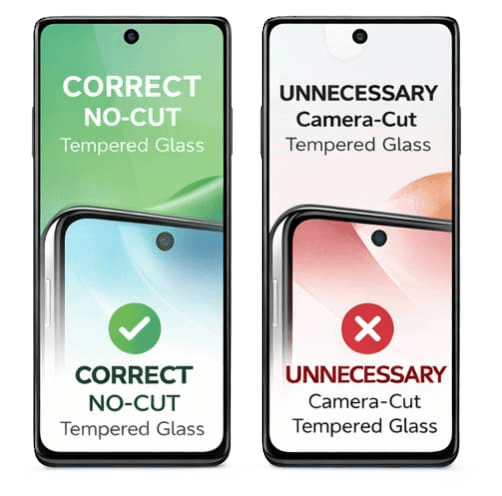
- Punch-Hole / Infinity-O → ✅ No camera cut required
- Camera-cut glass → ❌ Optional, less preferred
⚠️ Using unnecessary cut glass may cause:
- Weak glass edges
- Dust accumulation around the hole
- Alignment sensitivity
Common Names Used for Tempered Glass in the Market
Depending on region, trade habits, or seller terminology, punch-hole display protection glass may be referred to as:
- Tempered Glass
- Safety Glass
- Screen Glass
- Display Protection Glass
- Full Display Glass
- No-Cut Tempered Glass
Although naming varies, the functional requirement does not change:
👉 Correct coverage + correct camera logic + stable edge fit
A different name does not change whether the glass is suitable or not.
Types of Camera Coverage Used in Punch-Hole Display Glass
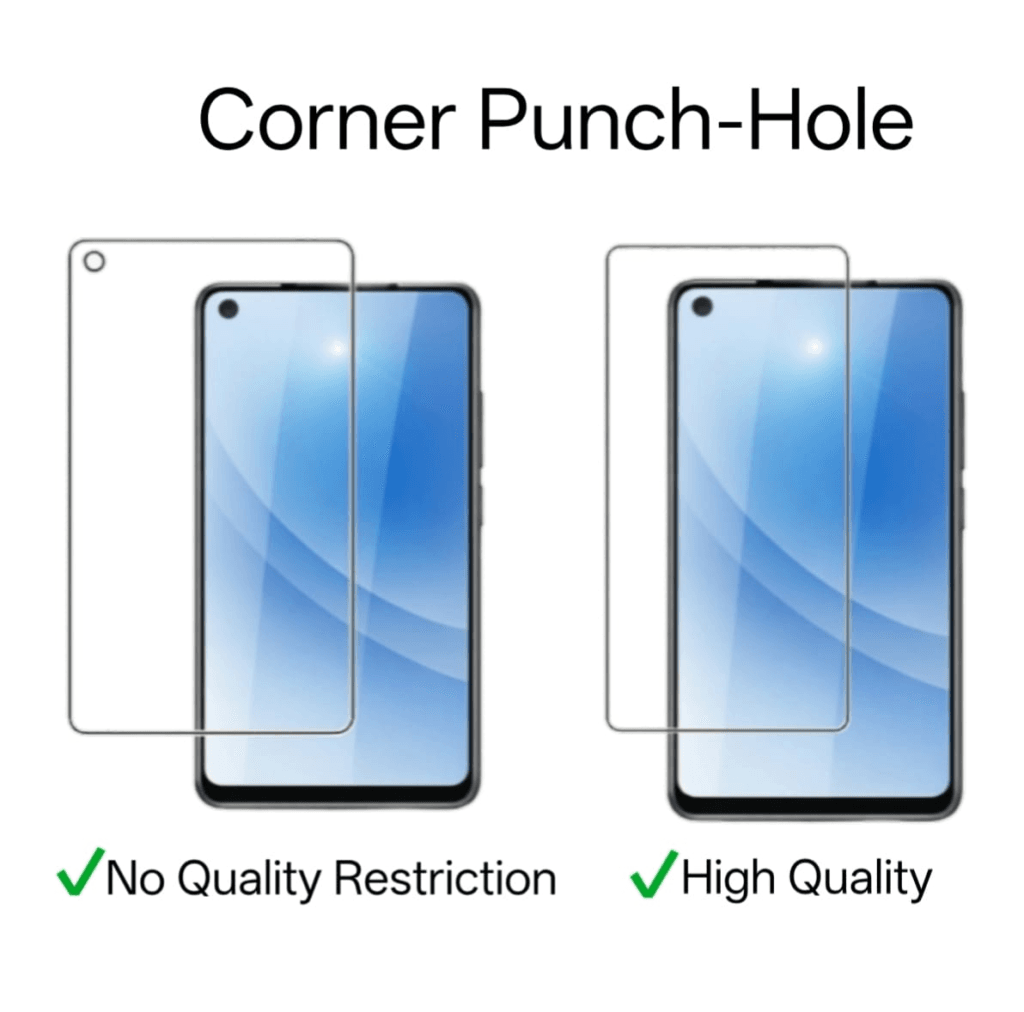
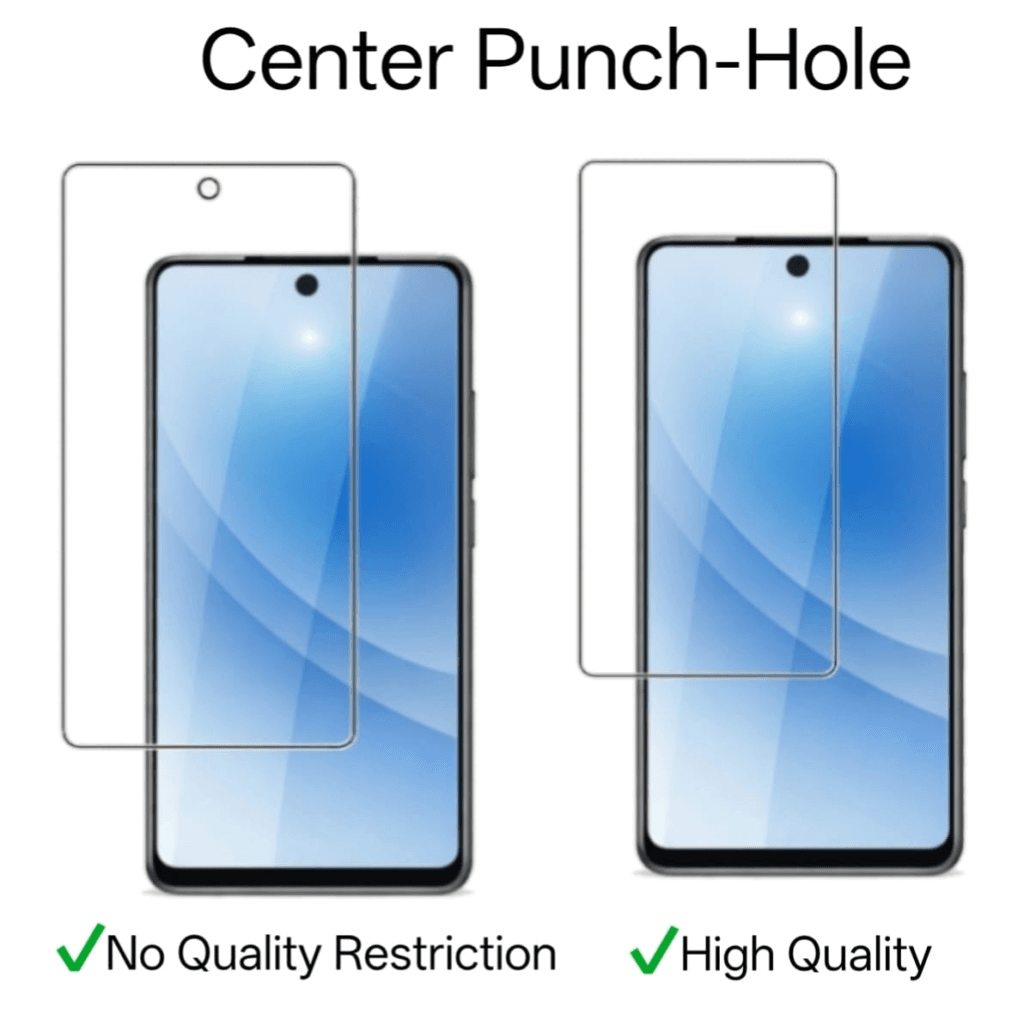
Punch-hole display tempered glass is generally found in two coverage formats in the market:
1️⃣ No-Cut (Full Display) Tempered Glass (Preferred & structurally correct)
- Glass fully covers the display, including the punch-hole camera
- Camera remains visible through optical glass transparency
- No weak cut edges around the camera area
📌 This format is correct for punch-hole / Infinity-O displays when glass quality is good.
2️⃣ Punch-Hole Camera Cut Tempered Glass (Optional, quality-dependent)
- Small circular cut provided around the camera
- Camera remains completely exposed
- Often chosen for budget or lower optical-grade glass
📌 This format is not required by display design, but sometimes used due to glass quality limitations.
🔍 Important clarity for readers:
- Punch-hole displays do NOT require a camera cut by design
- The decision between no-cut and cut glass depends on optical quality, not display structure
- Poor camera clarity is caused by low-grade glass or coatings, not by camera coverage itself
This distinction helps avoid unnecessary cuts, weak edges, and repeated replacements.
Privacy & Matte Tempered Glass on Punch-Hole Displays
Privacy and matte tempered glass are widely used on punch-hole display phones, especially in budget and mid-range segments.
However, compatibility depends heavily on optical quality and surface layers, not just display type.
Because the camera is surrounded by pixels:
- Privacy filters may reduce light to the sensor
- Matte coatings may soften display sharpness
- Low-quality coatings can create haze around the hole
📌 Recommendation:
- Privacy / Matte glass should only be chosen if the optical quality is verified
- Glass is designed specifically for punch-hole / Infinity-O displays
Two Common Market Practices You May Encounter
1️⃣ Correct Display-Specific Glass
- Designed for punch-hole / Infinity-O displays
- Full-display (no-cut) glass
- Balanced for camera alignment and coverage
- Performs consistently in daily use
2️⃣ Near-Fit or Size-Only Glass
- Selected mainly by diagonal size
- May have oversized, misplaced, or unnecessary cuts
- Appears acceptable during installation
- Develops issues over time (lifting, dust entry, reduced clarity)
📌 Only the first approach follows display structure logic.
This page focuses on structure-correct compatibility, not temporary visual fit.
Real-World Fit Factors (Beyond Display Type)

Even with correct punch-hole tempered glass, long-term performance depends on fit behavior, not just diagonal size or display type.
Key factors that influence stability:
- Width tolerance: Glass must match the active display width, not the outer frame
- Bezel thickness & hole placement: Minor variations affect how the glass settles around the camera
- Edge clearance: Proper inset spacing prevents lifting from hand pressure or daily handling
- Case compatibility: Most punch-hole glasses are slightly inset to avoid pressure cracks from back covers
📌 Two phones with the same diagonal size may still require different punch-hole tempered glass.
Correct fit protects the display without stress, peeling, or repeat replacements.
Case-Friendly Design & Edge Coverage
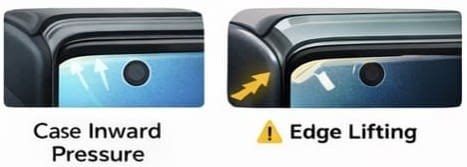
Most punch-hole tempered glass is designed to be:
- Slightly smaller than the full front panel
- Compatible with protective back covers
This helps prevent:
- Edge lifting
- Pressure cracks caused by tight cases
- Interference with daily accessories
Manufacturing Quality Still Decides the Outcome
Even when display type, size, and case compatibility are correct, real-world performance depends on the glass itself.
Key quality elements:
- Edge finishing & curvature: Poorly polished edges increase lifting, chipping, and hand discomfort
- Bezel tuning accuracy: High-quality glass is precisely tuned to display borders
- Adhesive (gum) uniformity: Patchy adhesive causes halo effects, touch inconsistency, early peeling
- Glass flatness & tempering consistency: Low-grade tempering leads to micro-warping
📌 “Good brand & high quality” = consistent edge shaping, accurate sizing, proper adhesive, and reliable tempering.
Two glasses with identical size and cut can perform very differently.
Replacement Cycle & Practical Advice
Tempered glass is sacrificial, not permanent.
Recommended replacement:
- Every 120–150 days
- Immediately after visible cracks, lifting, or reduced touch sensitivity
🔍 Pro Tip (Why This Page Decides Compatibility This Way)
Punch-hole (Infinity-O) display compatibility is decided by display structure first, and glass quality and fit behavior second — not just by size or naming.
If you want to clearly understand:
- Why no-cut tempered glass is usually preferred for punch-hole displays
- When camera-cut glass is still used and what limitations it has
- How optical clarity, adhesive quality, and edge tuning affect real-world performance
👉 Read the Tempered Glass Gold Guide before making a final selection.
This child page explains punch-hole–specific application.
The Gold Post explains the core principles that apply across all display types.
Find Your Mobile Model (Punch-Hole Display)
Use the live search below to find the correct punch-hole tempered glass for your mobile model.
(Helps identify compatibility based on display design, cut logic, and real-world fit behavior — not just approximate screen size.)
Trader / Business Reminder: Model names above are for reference and stock verification only, listed as mentioned on the box. Always confirm the actual device design and camera placement before selecting tempered glass.
Who This Guide Helps
👤 End Users
- Avoid unnecessary camera cuts
- Understand fingerprint compatibility
- Reduce repeat replacements
🏪 Retailers
- Prevent wrong recommendations
- Reduce complaints
- Build trust through logic
🔧 Repair Technicians
- Ensure stable installations
- Avoid near-fit practices
📦 Wholesalers
- Stock correct no-cut variants
- Reduce dead inventory