Selecting the correct tempered glass for a classic bezel display mobile requires more than matching screen size.
Classic bezel phones have visible top and bottom borders that directly influence how tempered glass sits, adheres, and performs over time.
Ignoring bezel structure — especially camera placement and bottom geometry — often leads to lifting, button interference, or repeated replacement complaints.
This guide explains how classic bezel displays work, why camera cut and bottom geometry matter, and how correct selection prevents real-world fitting issues.
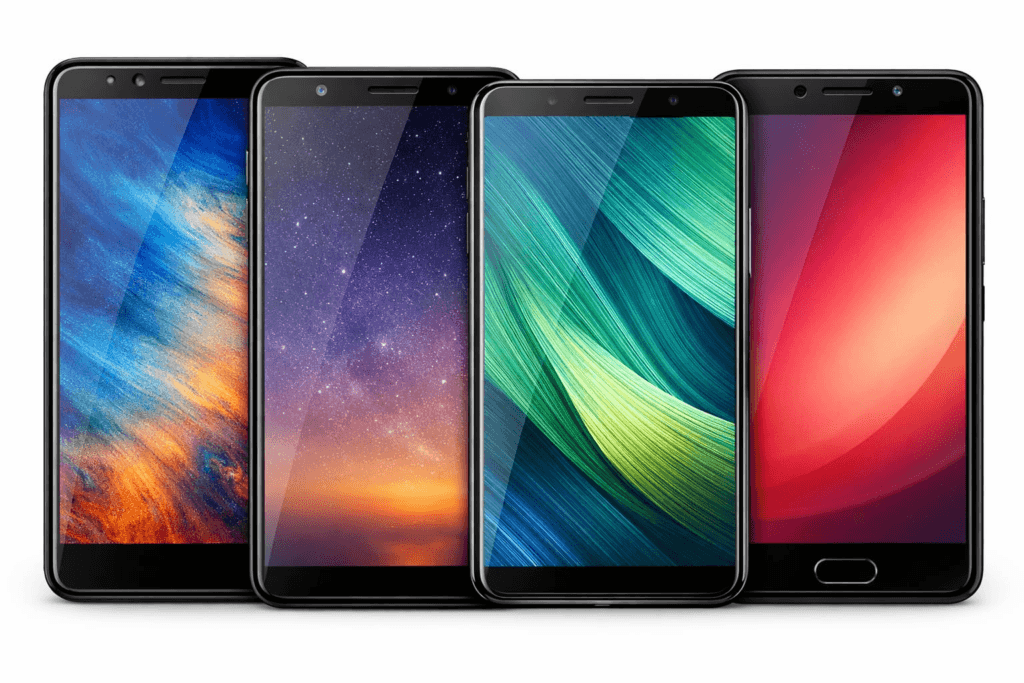
✅ Quick Compatibility Check (Read This First)
Use this quick check for instant direction:
✔️ Your phone has visible top and bottom bezels
✔️ Front camera and sensors are placed above the screen area
✔️ The bottom area includes a bezel (with or without a physical/home button)
✔️ Tempered glass aligns cleanly without pressing into camera or bottom controls
❌ Your phone has a notch, punch-hole, or capsule cut in the display
❌ The display extends edge-to-edge without visible bezels
👉 If all ✔️ apply → Continue reading this page
👉 If any ❌ apply → Stop here and choose the correct display type below
🔀 Navigation Shortcut (Important)
If your phone does NOT have a classic bezel display, this page will not help you.
Please move directly to the correct guide to avoid confusion:
- Punch-Hole / Hole-Punch → Punch-Hole Display Tempered Glass
- Waterdrop / Infinity-U → Waterdrop Display Tempered Glass
- Wide Notch → Wide Notch Display Tempered Glass
- Dynamic Island → Dynamic Island Tempered Glass
- Notch-less / Pop-up Camera → Notch-less Display Tempered Glass
👉 Each display follows its own structure logic.
Using the wrong logic leads to fitting problems, not protection.
Understanding the Classic Bezel Display Design
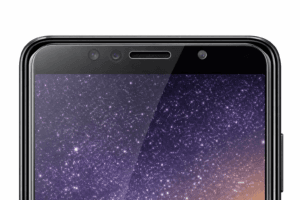
A classic bezel display features:
- A top bezel housing the front camera and sensors
- A bottom bezel that may contain:
- Navigation area
- Capacitive buttons
- Physical or touch-based home button
Unlike modern cut-out displays, all functional elements sit outside the active screen area, but still directly affect tempered glass dimensions.
📌 Although newer designs have reduced bezels, millions of classic bezel phones remain active in daily use, resale, refurbishment, and secondary-device roles.
Why Camera Cut Is Mandatory for Classic Bezel Displays
For classic bezel phones, camera cut is not optional.
The front camera sits behind the top bezel region.
If tempered glass does not provide proper clearance:
⚠️ Camera obstruction or shadowing occurs
⚠️ Glass presses unevenly near the top edge
⚠️ Dust accumulation increases around camera area
⚠️ Long-term peeling becomes common
🔍 The camera cut must align with:
- Camera position
- Sensor spacing
- Bezel thickness
Approximate or generic cuts often fail after short-term use.
Bottom Bezel Geometry – The Most Ignored Factor (But Critical)
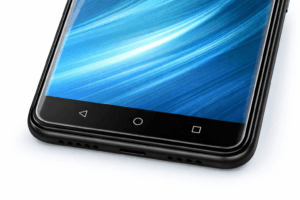
Classic bezel displays are not defined by the top bezel alone.
The bottom bezel structure directly affects glass length and stability, especially in phones that include:
- Physical home buttons
- Capacitive navigation areas
- Raised button rings or recessed zones
If bottom geometry is ignored:
⚠️ Glass presses against the button area
⚠️ Button responsiveness reduces
⚠️ Bottom edge lifting starts
⚠️ Installers label the glass as “oversized”
📌 Correct tempered glass design either:
- Stops short of pressure zones, or
- Provides shaped clearance where required
Bottom geometry is part of display structure — not a device feature.
Classic Bezel Is Not One Fixed Format
A common mistake is treating all classic bezel phones the same.
In reality:
- Two classic bezel phones may share screen size
- But differ in:
- Top bezel height
- Camera placement
- Bottom bezel thickness
- Button integration
📌 This is why visual structure matching is more reliable than size matching alone.
Two Market Practices You’ll Commonly See
1️⃣ Structure-Matched Classic Bezel Glass (Correct Approach)
- Camera cut aligned to top bezel layout
- Bottom edge tuned to avoid pressure zones
- Stable installation
- Predictable long-term performance
Suitable for refurbishment, resale, and daily-use devices.
2️⃣ Near-Fit or Size-Only Glass (Common but Risky)
- Selected mainly by diagonal size
- Generic camera clearance
- Bottom edge ignores button or bezel interaction
Looks acceptable initially, but develops lifting, misfit, or functional issues later.
📌 Both exist in the market — only one follows display structure logic.
Real-World Fit Factors Beyond Cuts
Even with correct camera and bottom geometry, performance depends on:
- Width tolerance (active display vs bezel width)
- Edge clearance (prevents pressure lifting)
- Bezel depth consistency
- Case compatibility (tight covers amplify errors)
📌 Two classic bezel phones with the same size can still require different glass.
Role of Good Brand & Manufacturing Quality (Very Important)
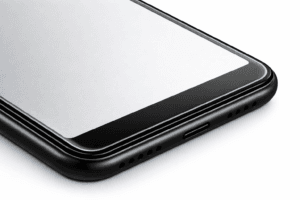
Correct structure alone is not enough.
Real-world performance depends heavily on manufacturing quality:
- Edge polishing quality (prevents chipping & lift)
- CNC cut precision (camera & bottom accuracy)
- Adhesive uniformity (avoids halo & peeling)
- Glass flatness (prevents delayed failure)
📌 “Good brand & good quality” means process consistency, not marketing.
Two glasses with identical shape can behave very differently after installation.
Replacement Cycle & Practical Advice
Tempered glass is a sacrificial layer.
Recommended replacement:
- Every 120–150 days, or
- Immediately after cracks, lifting, or button interference
A compromised protector cannot protect the display reliably.
🔍 Pro Tip (How Compatibility Is Decided Here)
Classic bezel compatibility is decided by:
1️⃣ Display structure
2️⃣ Camera cut accuracy
3️⃣ Bottom bezel geometry
4️⃣ Fit behavior
5️⃣ Manufacturing quality
—not by naming, trends, or size alone.
For universal principles, refer to the Tempered Glass Gold Guide.
This page applies those principles specifically to classic bezel displays.
🔍 Find Your Mobile Model (Classic Bezel Display)
Use the live search below to locate the correct classic bezel tempered glass for your phone.
(Search identifies compatibility based on camera placement, bottom geometry, and fit behavior — not just screen size.)
Trader / Business Reminder: Model names above are for reference and stock verification only, listed as mentioned on the box. Always confirm the actual device design and camera placement before selecting tempered glass.
🎯 Who This Guide Helps
👤 End Users
- Avoid wrong glass selection
- Prevent button and camera issues
- Reduce repeat replacements
🏪 Retailers
- Clear recommendation logic
- Fewer returns and disputes
- Higher trust
🔧 Repair Technicians
- Stable installations
- No pressure-fit mistakes
📦 Wholesalers
- Correct variant stocking
- Reduced dead or disputed inventory